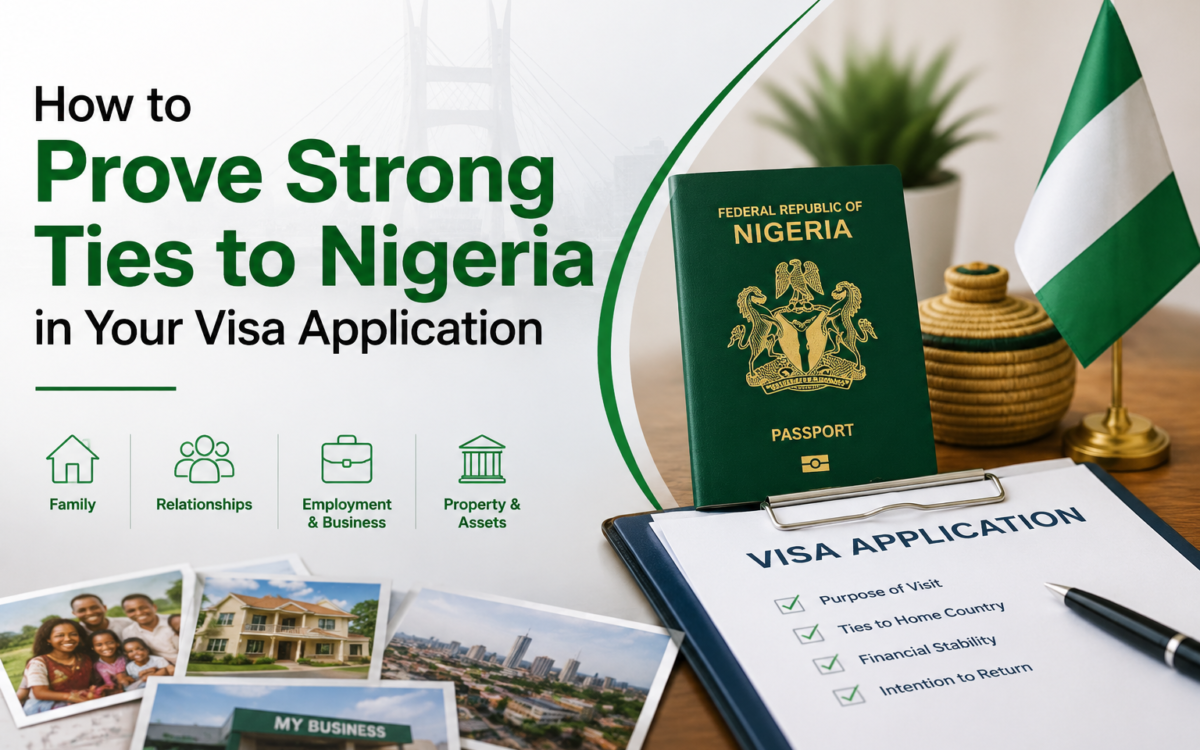

How to Prove Strong Ties to Nigeria in Your Visa Application (And Why It Matters)
You have gathered your documents. You have booked your appointment. You have even practised answers to common visa interview questions. But there is one aspect of the visa application process…
You have gathered your documents. You have booked your appointment. You have even practised answers to common visa interview questions. But there is one aspect of the visa application process that trips up thousands of Nigerians every year, and most applicants do not fully understand it until after they receive a rejection.
It is the question of ties to your home country.
Almost every visa category requires the applicant to demonstrate that they have strong enough reasons to return to Nigeria after their visit or programme ends. Without this, the embassy assumes you may overstay your visa, and your application gets refused.
This guide explains exactly what “ties to Nigeria” means, why embassies care so much about it, and the specific documents and strategies you can use to prove yours.
What Are “Ties to Nigeria” and Why Do Embassies Ask for Them?
When an embassy officer reviews your application, one of their primary concerns is immigration intent. Will this person leave when they are supposed to? Or will they overstay their visa and remain in the country illegally?
To answer that question, they look for evidence that you have a life waiting for you back in Nigeria and reasons compelling enough to bring you home. These are your ties.
Ties can be financial, professional, social, or family-based. The stronger and more varied they are, the more confident the officer is that you will return.
This matters especially for Nigerians because Nigerian passports are subject to increased scrutiny at many embassies due to high visa overstay rates historically associated with Nigeria. That is the reality. The good news is that you can address it directly with the right documentation.
The Four Categories of Ties Embassies Recognise
1. Employment and Career Ties
Having a steady job in Nigeria is one of the most powerful forms of evidence you can provide. It tells the embassy that you have an income, a professional position, and a workplace expecting your return.
If you are employed, your documentation should include:
- An employment letter from your employer stating your position, salary, length of service, and the approved leave period for your trip
- Your most recent payslips (typically three to six months)
- Your employment contract, if available
- A letter confirming that your job will be waiting for you upon your return
If you are a business owner, you need to show that your business is active and depends on your presence:
- CAC registration documents
- Recent bank statements showing business transactions
- Evidence of ongoing contracts, clients, or staff on your payroll
- A tax clearance certificate
2. Financial Ties
Strong finances in Nigeria demonstrate that you have assets worth returning to. They also show that you can fund your trip without needing to work illegally abroad.
Key financial documents include:
- Personal bank statements for the last three to six months showing consistent balances and regular activity
- Property ownership documents: a Certificate of Occupancy, deed of assignment, or land documents in your name
- Evidence of investments, such as fixed deposit certificates, shares, or mutual fund statements
- Vehicle registration documents if you own a car.
The bank statement deserves special attention. Embassies look at the pattern of your account, not just the balance. A statement that suddenly shows a large deposit right before the application is a red flag. Consistent, organic account activity over time is what builds trust.
3. Family and Social Ties
Family responsibilities are one of the most human and compelling reasons to return home. If you have dependents in Nigeria, a spouse, children, or elderly parents, the embassy sees this as a strong anchor.
Documents that support family ties include:
- Marriage certificate if you are married and your spouse is remaining in Nigeria
- Birth certificates of children who will remain in Nigeria during your trip
- Evidence that you are the financial provider for dependants (bank transfers, school fee receipts, utility bills in your name)
- If you are caring for elderly parents, a letter or documentation supporting this can strengthen your file
Social ties also include community involvement, like membership in professional associations, religious organisations, or civic groups. While these are supporting evidence rather than primary proof, they paint a fuller picture of a person rooted in Nigerian life.
4. Property and Asset Ties
Owning property or significant assets in Nigeria is one of the clearest signals that you have material reasons to return. You are unlikely to abandon a house, land, or business.
Useful documents here include:
- Title deeds or Certificate of Occupancy for land or property
- A utility bill in your name at a Nigerian address, showing you occupy and maintain a residence
- Evidence of ongoing mortgage payments, which shows both financial commitment and a fixed residence
- Vehicle documents showing registered ownership
Even if the property is modest, documented ownership counts. It shows roots.
How to Present Your Ties Effectively
Gathering the documents is only half the job. How you organise and present them matters just as much.
Be proactive, not reactive. Do not wait for an officer to ask for proof of ties. Submit the evidence upfront as part of your application package. A well-organised file signals a prepared, confident applicant.
Make it easy to understand. Label your documents clearly. If you are submitting bank statements, highlight the key figures. If you are including a property document, include a brief cover note explaining its relevance. Officers process hundreds of applications — the easier you make their job, the better.
Be consistent. Every document in your file should tell the same story. Your employment letter, bank statements, and travel itinerary should all align. Inconsistencies, even small ones, create doubt.
Do not over-document. Submitting fifty pages of unorganised paperwork is not impressive. It is confusing. Select the strongest evidence in each category and present it clearly.
Special Situations: What If Your Ties Are Weak?
Not everyone has a permanent job, property, or a family in Nigeria. First-time applicants, young graduates, and self-employed individuals often worry that their ties are insufficient. Here is how to approach those situations honestly.
If you are a student or recent graduate: Demonstrate ties through your academic enrolment, upcoming examinations, or career plans in Nigeria. A letter from your institution or a signed offer of employment after graduation can support your case.
If you are self-employed or work informally: Focus on your business documentation. Even informal traders can show transaction records, client relationships, or professional memberships. A letter from a professional association or industry body adds weight.
If you are unmarried with no children: Family ties are not limited to spouse and children. Ageing parents, siblings you support, or a household you maintain in Nigeria all count. Document these clearly.
If you have had a previous visa refusal: This does not automatically disqualify you, but it means your ties documentation needs to be especially thorough. Address the refusal honestly and show what has changed or what additional evidence you are now providing.
A Quick Reference: Documents by Category
Employment: Statement of job offer/contract, employer letter, recent payslips, tax clearance
Business Ownership: CAC registration, business bank statements, contracts or invoices, tax clearance
Financial: Personal bank statements (3–6 months), investment certificates, property documents
Family: Marriage certificate, children’s birth certificates, proof of financial support for dependents
Property and Assets: Title deed or C of O, utility bills in your name, mortgage statements, vehicle documents
Social and Community: Professional association membership, religious organisation letters, civic involvement evidence
Final Thoughts
The question of ties to Nigeria is not a trick designed to catch you out. It is a standard part of how embassies assess visa risk. And it is one you can answer confidently, if you understand what they are looking for and prepare accordingly.
The applicants who get approved are not always the wealthiest or the most well-travelled. They are the ones who presented a clear, honest, and well-documented picture of a life rooted in Nigeria and a compelling reason to return to it.
Start building that picture early. Know what documents you need. Organise them carefully. And if you are unsure where you stand, get professional guidance before you submit.
Not sure if your ties documentation is strong enough? At Tabula Rasa Travel Consultancy, we review visa files before submission and help you identify gaps before an officer does. Book a consultation at tabrasat.com or call +234 702 507 5477.

This was helpful and insightful.